The Game Engine of this Era.

3SR is a game engine and editor written in C# on .NET 10, rendering through Vulkan 1.3. The editor's Play mode and a built game run the same runtime, and projects build for Windows, Linux and the web.

  • C# 14 · .NET 10
  • AOT-compiled
  • Vulkan 1.3
  • Hardware ray tracing
  • WebGPU export
  • English · العربية
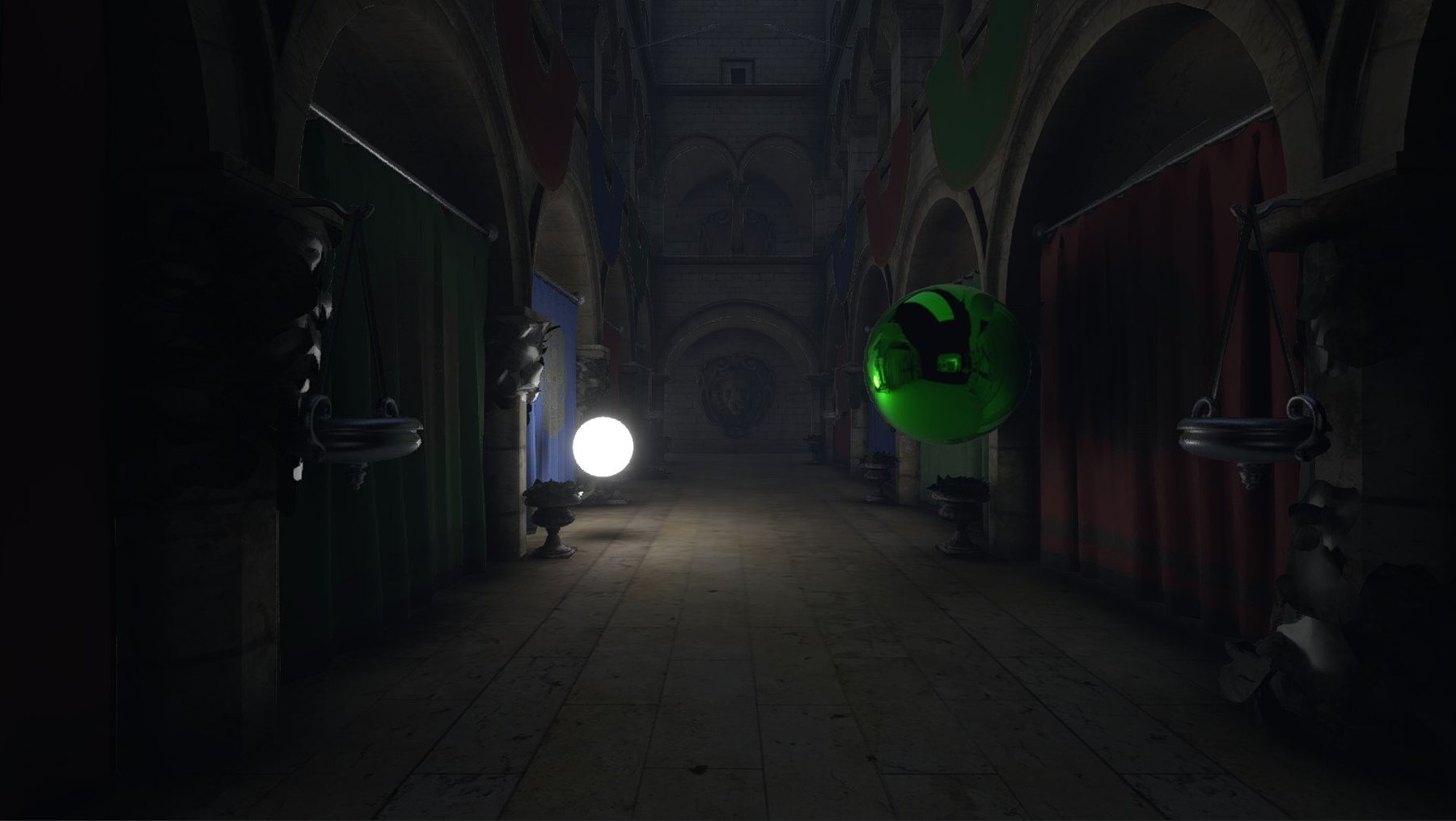
A palace hall with a glowing light and a mirrored green sphere
Ray-traced reflections in the Sponza scene

Rendering

Vulkan 1.3 renderer

  • Hardware ray tracing when the GPU supports it, including skinned and deforming meshes.
  • Lighting backends that switch at run time: Unlit, clustered Forward+, ray-traced GI and DDGI.
  • Reflections from ray tracing, screen space or reflection probes.
  • PBR materials and node-based shader graphs with 60+ node types.
  • Sky and post-processing: procedural atmosphere, volumetric lighting, height fog, TAA, bloom, tonemapping and colour grading.
  • Performance: LOD groups, GPU occlusion culling, automatic instancing and GPU-simulated particles.

Physics

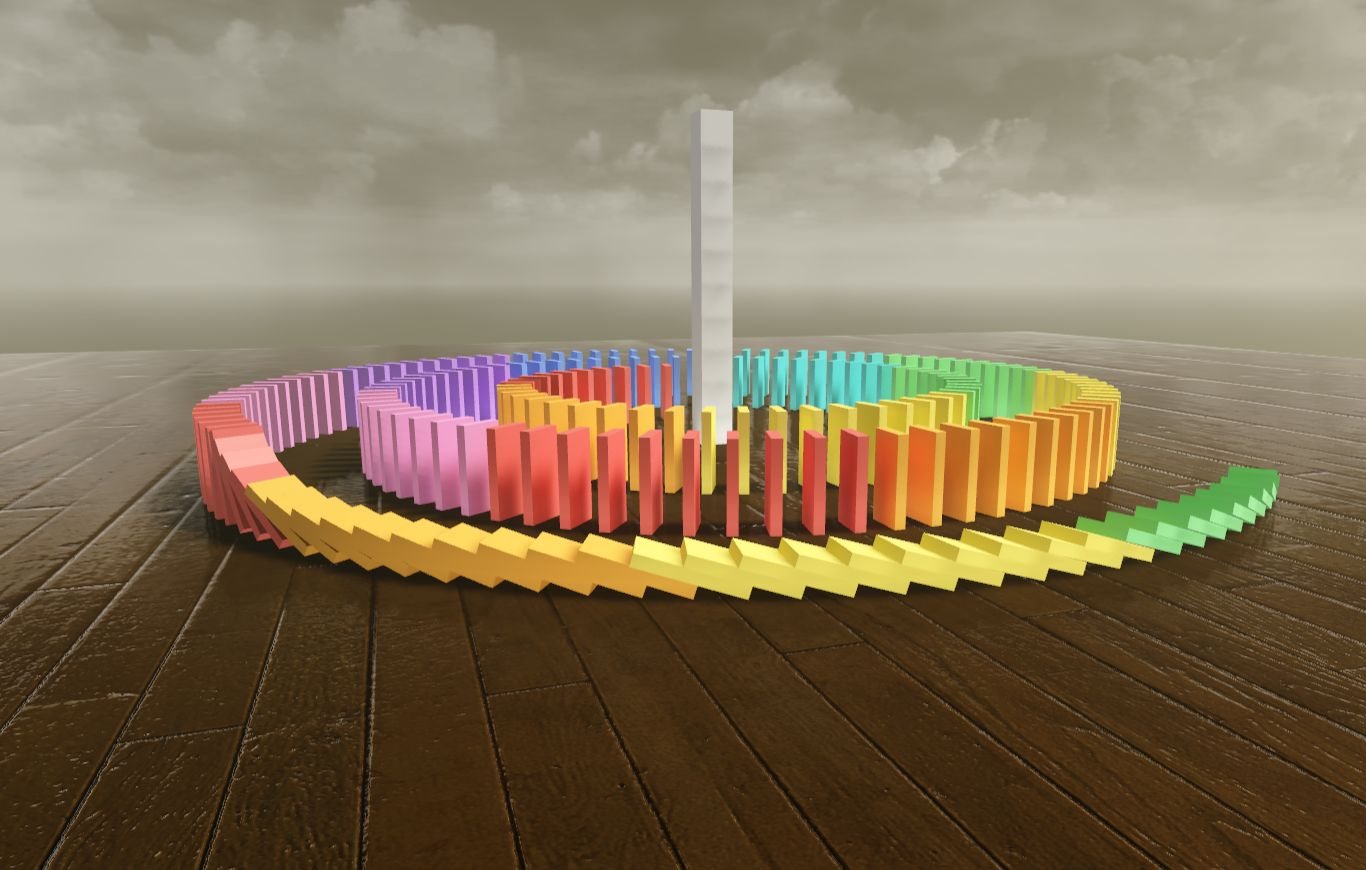
Deterministic physics on every core

Rigid bodies

BepuPhysics 2.5 with deterministic stepping on the engine's job scheduler. Continuous collision detection, interpolation, all four force modes, and box, sphere, capsule and convex or concave mesh colliders.

Characters and vehicles

Character controllers with grounding, slopes and steps. Wheel-collider vehicles with suspension, motor and brake torque, and friction curves sharing one friction circle.

Active ragdolls

Ragdolls built from a humanoid skeleton, with muscles and a balance servo: hit reactions, stagger, loss of balance, collapse and stand-up.

Cloth and soft bodies

In-house XPBD cloth on the CPU or GPU compute, with pinning, wind and turbulence. Soft bodies with pressure, volume preservation and two-way contact with rigid bodies.

Destruction

Deterministic Voronoi fracture with bonded pieces. Standing structures stay up, and momentum carries into the pieces.

Queries and events

Raycasts, shape casts and overlaps with non-allocating variants, a layer collision matrix, and collision events delivered in a deterministic order.

Multithreading

Built to use every core

  • Data-oriented archetype ECS on a shared, work-stealing job scheduler that splits work by chunk.
  • Parallel script updates: one attribute runs a script's Update and FixedUpdate across chunks in parallel, with results bit-identical to a sequential run.
  • Compile-time analyzers catch mistakes specific to parallel scripts.
  • Physics, the navigation crowd and shadow recording run on the job workers.
  • Optional render thread that records and presents a frame while the main thread runs the next update.
  • Audio mixes on its own high-priority thread, and navmesh re-bakes, texture caching and thumbnails run on worker threads.

Animation

Characters that move well

  • GPU compute skinning into a shared vertex pool.
  • Animator controllers with blend trees, layers and avatar masks.
  • Humanoid retargeting across the common rig families.
  • Limb IK and look-at through the spine and head.
  • Procedural legs and chains: 2 to 8 legs that step on the real ground, plus tails, wings and cables.
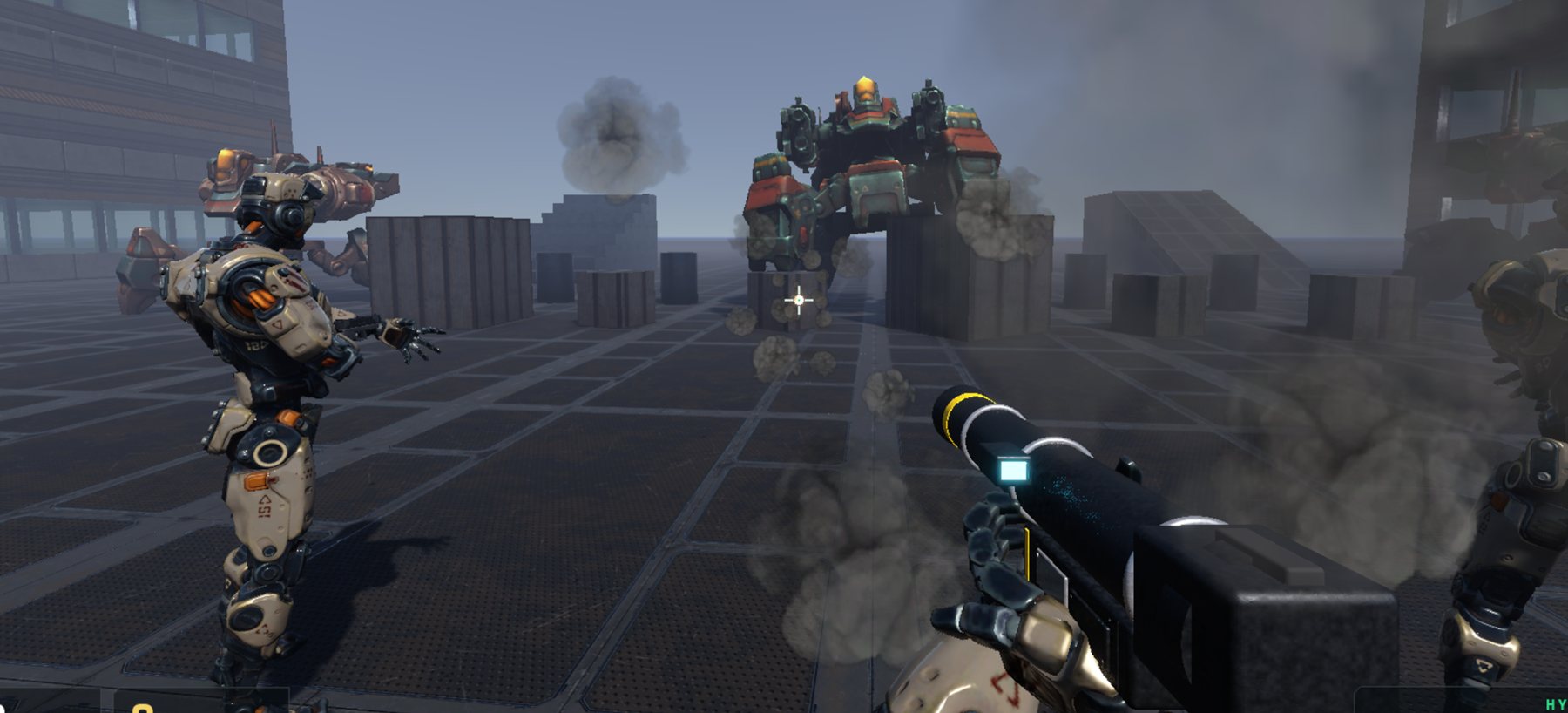
Armoured robots and a battle mech fighting in a city

Networking

Transport

The engine's own reliable UDP and TCP channels, with LAN discovery and simulated latency and loss.

Replication

Networked objects, synced variables and RPCs, with client prediction, reconciliation and lag compensation.

Topologies

Dedicated servers, host migration and a peer-to-peer mesh. Browser players can join desktop sessions.

Team deathmatch with lightning guns, fire and smoke
3ZM team deathmatch over the network

Runtime

Scripting and systems

C# scripting

C# 14 scripts compiled in-process, as structs stored in the ECS or classic classes. Hot reload in under a second, with fields carried over by name.

Play mode snapshots

Play snapshots the whole scene, including private and static script fields, and restores it on Stop.

Input

Rebindable actions for keyboard, mouse, gamepad and touch, local players, and button prompts that follow the last-used device.

Navigation

Tiled navmesh baking from colliders and meshes, re-baked at run time as the world changes. A crowd of 3,000 agents.

Audio

The engine's own 48 kHz mixer with 3D sound, streaming, mixer groups and effects. Tested with 2,000 sources.

Cinematics

Frame-accurate gameplay takes, a physical-lens camera, and offline rendering with motion blur and depth of field.

Game UI

RmlUi-based in-game UI with anchors, canvases and standard controls, English and Arabic text, and Figma import.

Profiling

A frame profiler with per-thread timelines, GPU passes and memory, in the editor and in built games.

Packages

Optional features are per-project packages, so only a project's packages are loaded, shown and shipped.
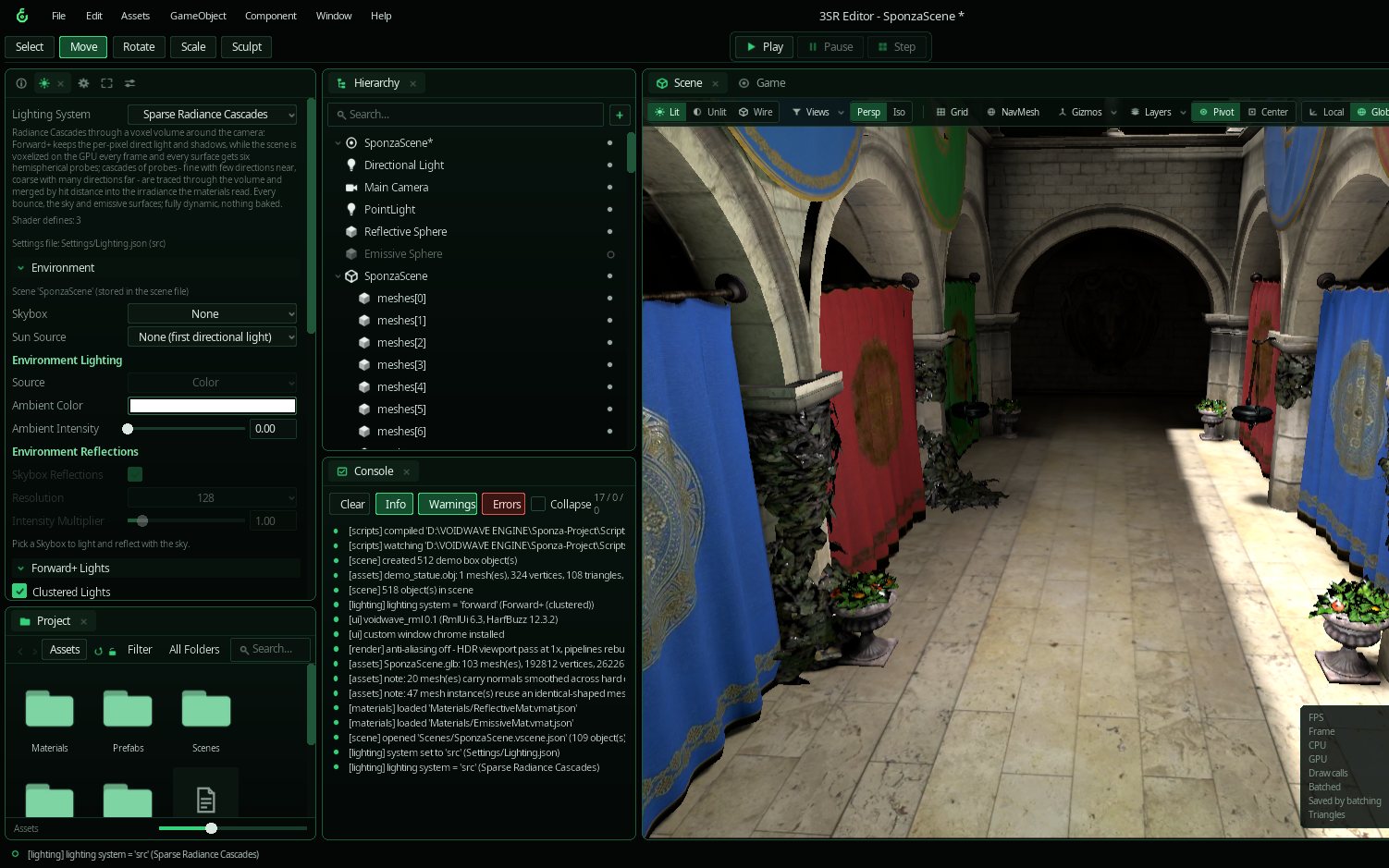
The 3SR editor lighting a palace courtyard
The editor lighting the Sponza scene

Editor

Standalone editor

  • Dockable windows that float onto any monitor, with layouts that persist.
  • English and Arabic, with full right-to-left mirroring.
  • Play, Pause and Step, with the scene restored on Stop.
  • Prefabs, materials, shader graphs and animator graphs edited live.
  • World building: terrain sculpting, foliage painting and splines for roads and rails.
  • 100-step undo covering scene edits and panels.

Automation

Tools for scripts and AI agents

Live debug API

A local HTTP API reads scene, lighting, audio, ECS and input state, drives the editor, and takes captures.

MCP server

Lets AI agents launch, inspect, edit, play, capture and test the editor, each in its own editor instance.

Playtests and replays

Deterministic scripted playtests with reports and failure captures. User bug reports replay frame for frame.

Building games
Windows, Linux and the web

  • Windows, plus 64-bit Linux and Steam Deck builds from the Windows editor.
  • Web export on WebGPU as a static site, for Chrome and Edge 113+, Safari 26 and Firefox 141+ on Windows.
  • .NET 10 CoreCLR on desktop, with ReadyToRun ahead-of-time compiled engine code by default for a faster start. .NET can be bundled with the game or installed on demand.
  • Ahead-of-time compiled WebAssembly player as an option for web builds. One sample game starts in 2.3 s instead of 9.4 s.
  • Encrypted content packs for web builds.
  • Builds ship only what the game uses: modules, assets and precompiled shaders.
  • Every build verifies itself by touring each scene as a first launch.
  • Dedicated server build target.
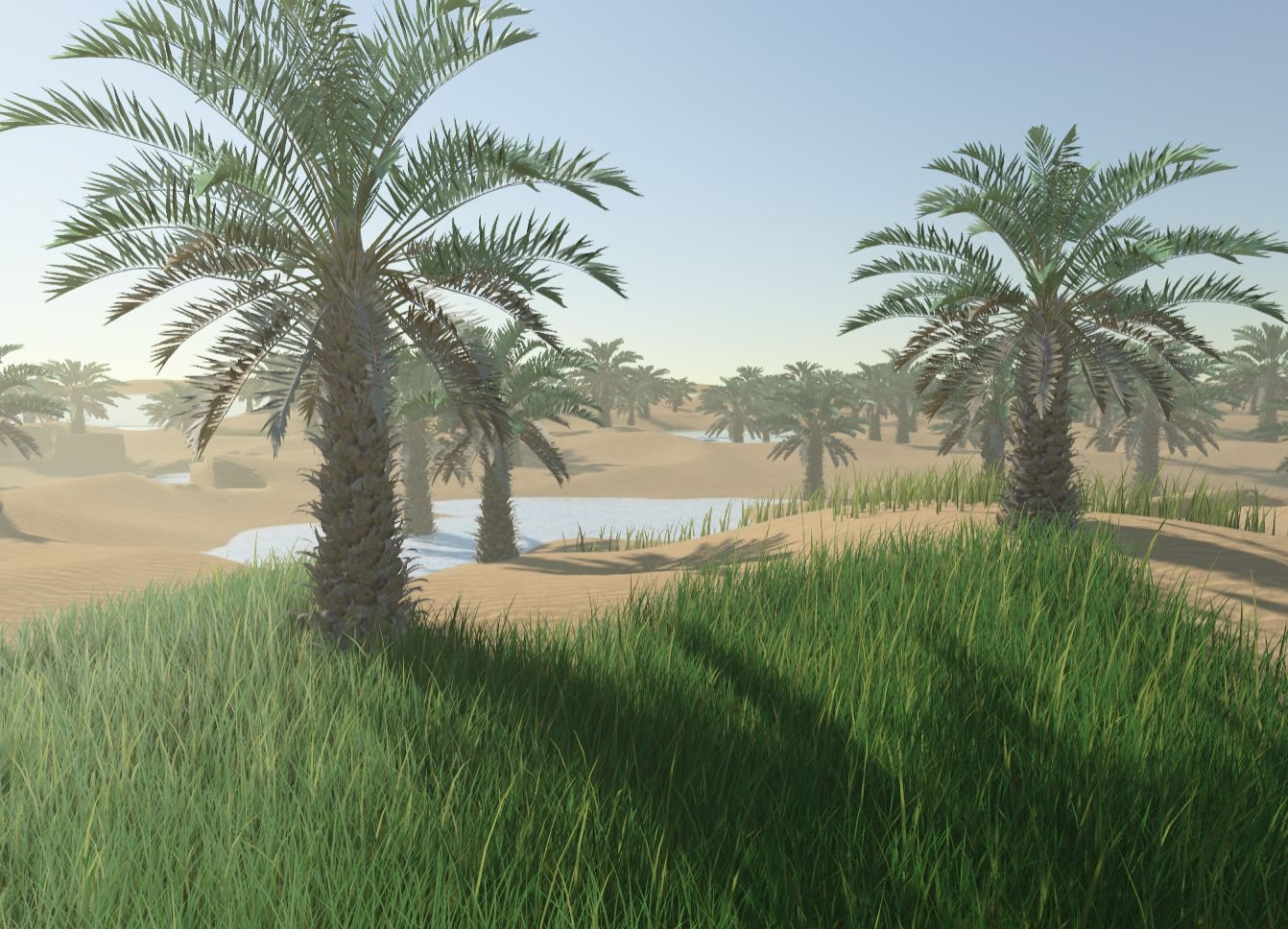
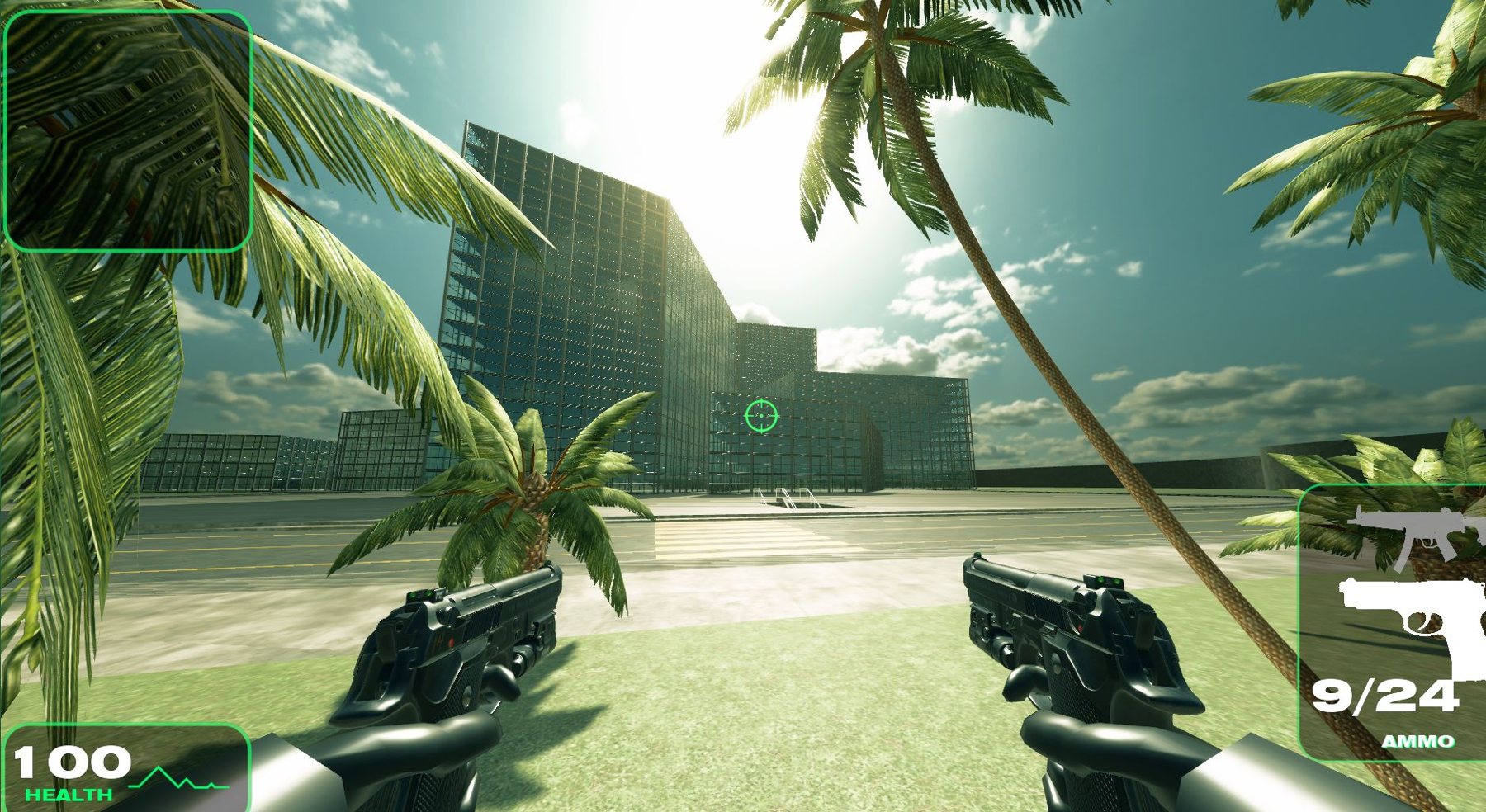
A first-person shooter scene with palm trees and a glass tower
A first-person game built in 3SR

Requirements

What it runs on

  • Windows 10 or 11 for the editor, with Linux and macOS kept viable by design.
  • .NET SDK 10.
  • A Vulkan 1.3 GPU with current drivers. Ray-traced GI and DDGI need hardware ray tracing.
  • A WebGPU browser to play web builds.

Status

In active development

The engine, editor and build pipeline are used daily on the sample games MATRIX and 3ZM. New projects start from First Person, Third Person, Isometric or Car Driving templates.

MATRIX is a third-person shootout in a lobby, with 8-way locomotion, bullet time, active-ragdoll agents, destructible pillars and glass, and a HUD.

Download

3SR Beta 0.2.0

The editor for Windows 10 and 11, with Windows builds and the starter templates. Setup adds the .NET 10 and Visual C++ runtimes if they are missing.

  • Packages from the editor: Linux, web and Android build support, and optional features such as networking, cinematics and ray-traced lighting, download when a project needs them.
  • Updates in the editor: Help > Check for Updates finds new editor versions, and the Package Manager finds new package versions.
  • A beta: expect rough edges, and keep your projects under version control.
Version
Beta 0.2.0
Platform
Windows 10 and 11, 64-bit
Download
39.4 MB installer
SHA-256
2410191ca2c9a33f5a8b65889c601a83ebc45ac5dd8108e4ad5bf5e7661077f1